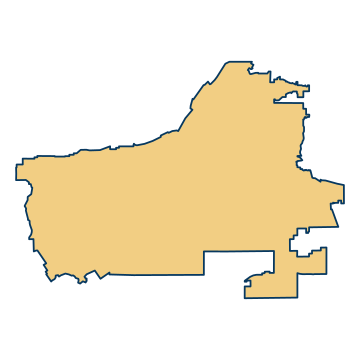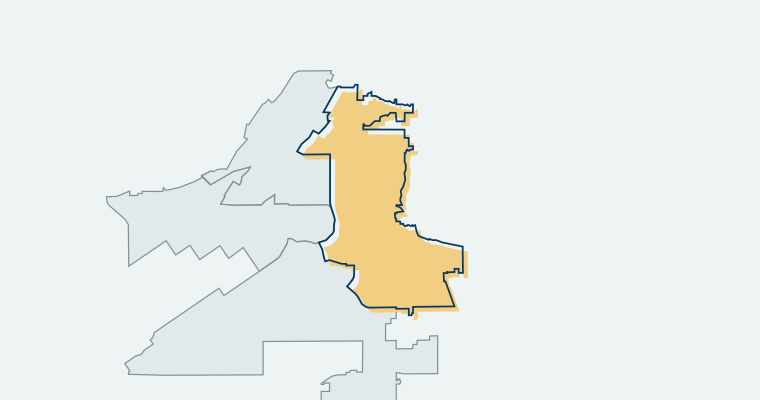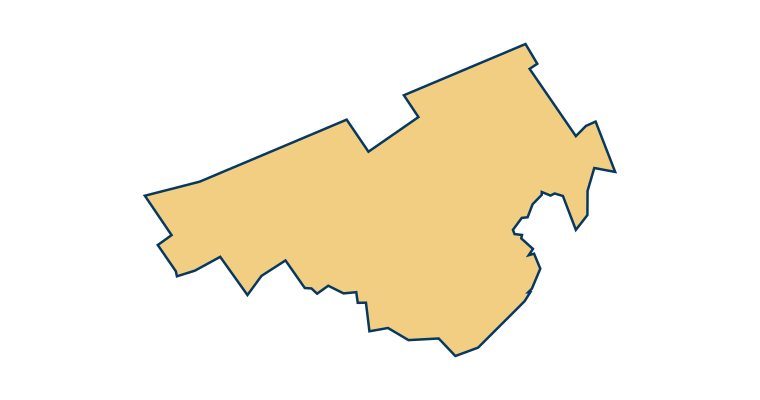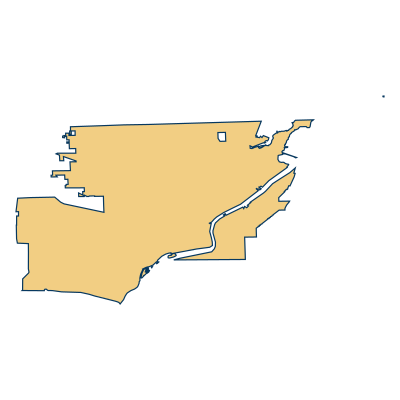
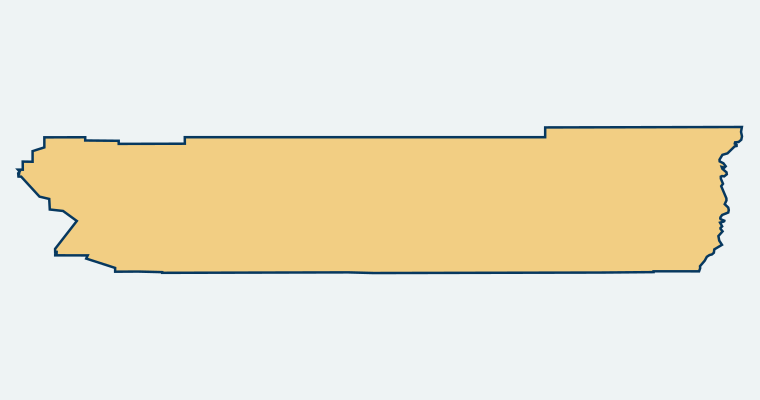
County race
Public records, put in context
What is happening in your government?
Paper Trail Politics brings scattered campaign-finance filings and civic records together so you can see who is involved, follow the money, and understand the decisions that affect your community.
The starting point
Follow the money
Explore reported contributions, expenditures, loans, independent spending, and filing history, always connected to the original public record.
Amounts reflect records in the current proof-of-concept dataset and should be read with the filing notes and methodology on each page.
Find your government
Every place has layers.
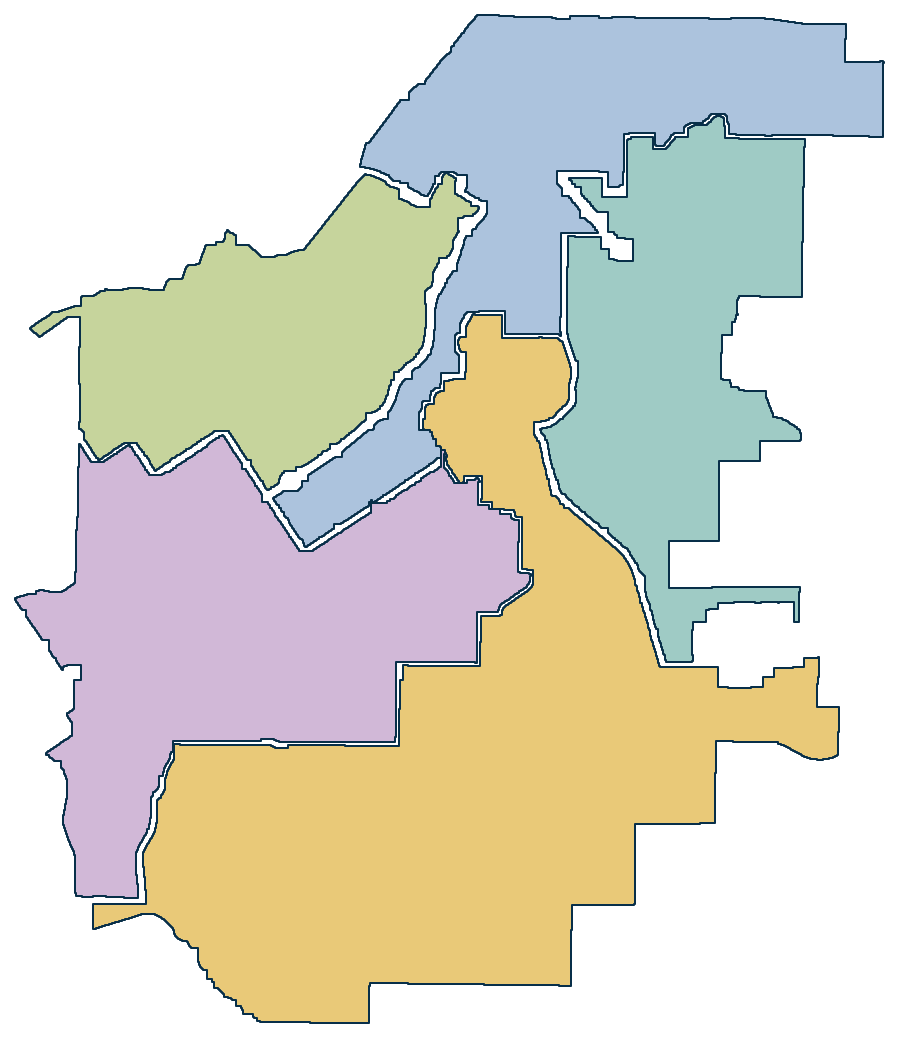
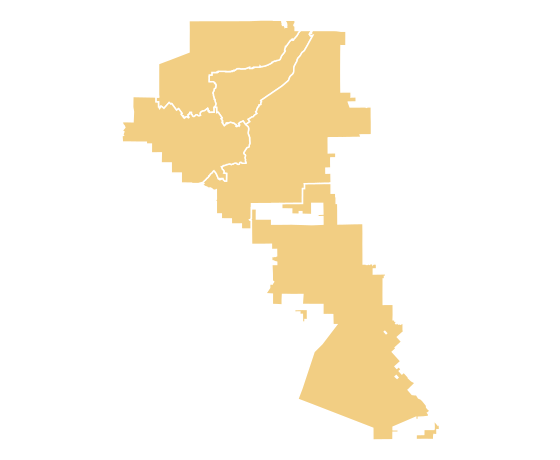
Your address may connect you to a county, city or community, school district, special districts, and overlapping state and federal representation. The office explorer makes those layers easier to see and compare.
Beyond availability
How open is the data?
Access to public data can vary widely from one jurisdiction to another. Paper Trail Politics’ scorecards will compare how timely, searchable, downloadable, documented, and preserved that information is. The scores will go beyond whether a portal simply exists, allowing people to see where access is stronger and what could improve transparency elsewhere.
Data openness scorecards
Preview of the criteria that will support government and filing-system assessments.
Illustrative layout only. These are not published scores.
Learn the system
Public records make more sense when someone explains them.
Short videos, interviews, and guides will connect directly to the records and pages where they are most useful.
Visit the Learn pageHow to Read a California Form 460
Walk through the summary page and Schedules A, E, D, and I. Explain what each section reports, how the totals relate, and what the form can and cannot tell us.
Follow One Contribution From Filing to Website
Trace one Riverside contribution through the committee, contributor, filing period, original PDF page, Paper Trail Politics entity page, and related race page.
Late Campaign Money: How to Read Forms 496 and 497
Explain late contributions versus late independent expenditures, who files each form, what “support” and “oppose” mean, and how Paper Trail Politics avoids double-counting activity later reported on Form 460.
The paper trail is bigger than elections
What we’re building next
Each future section will connect to the same people, organizations, governments, places, and source records.
Governments & Boards
Agencies, commissions, appointments, oversight, funding relationships, and Civic Jenga.
Bills & Proceedings
Bills, committees, votes, hearings, calendars, official video, and legislative records.
Lobbying
Registered lobbyists, clients, reported activity, issues, payments, and governmental actions.
About Paper Trail Politics
The source should never be a mystery.
Paper Trail Politics is a website designed to turn scattered government records into civic information people can understand and use. We identify the agencies, filing systems, and records behind the information, link to original sources whenever possible, and explain how the data was collected and presented.
Read about our mission and methodsPublic information stays public.
Corrections are part of the work. For this first public version, possible errors can be identified from the relevant data page. A sitewide submission form and voice or text hotline are planned.